
Agentiqus Case Study | Customer Support Automation | n8n + MCP + AI Agents
Every business knows the feeling: support tickets piling up, agents drowning in repetitive triage work, and customers waiting longer than they should. The conventional wisdom says hire more people. We say automate smarter.
This is the story of how we helped a mid-sized B2B SaaS company transform their customer support operations from a bottleneck into a competitive advantage, without replacing a single human agent.
The Framework: Shift Left, Then Shift Right
Before diving into the specifics, here is the framework we use for every AI engagement. We call it Shift Left, Shift Right, and it is the approach we recommend to every client who asks where to start with AI.
Shift Left: Automate Existing Struggles
Start by looking left, at your existing operations. Find the bottlenecks, the repetitive tasks, the cognitive overhead that slows your people down. These are not glamorous AI applications. They will not make headlines. But they deliver immediate, measurable ROI.
Shifting left means:
- Identifying high-volume, rule-based cognitive work
- Automating the tedious to free humans for the meaningful
- Building AI that augments your team rather than replacing them
- Learning what works in your specific context through real deployment
A shift-left project does not create new capabilities. It makes existing capabilities faster, more consistent, and more scalable. The case study that follows is a textbook example.
Shift Right: Unlock New Possibilities
Once you have freed up capacity and built organizational AI muscle, you can shift right, toward transformative applications that open new revenue streams or create breakthrough achievements.
Here is what shift-right looks like for the client in this story:
- Predictive support that identifies issues before customers report them
- Personalized product recommendations based on support interaction patterns
- Automated knowledge base generation from resolved tickets
- Proactive customer health scoring using support data signals
These are not hypothetical futures. They are concrete next steps, made possible because the foundation of operational AI is now in place.
The Problem: Drowning in Tickets
Our client operates a Salesforce-based customer support infrastructure serving thousands of enterprise customers. Support requests flow in through multiple channels: email, phone, direct web forms, and live chat. Each ticket lands in Salesforce Service Cloud, where human agents are expected to:
- Read and comprehend the ticket content
- Identify the root cause and categorize the issue
- Assign priority based on urgency and customer tier
- Route to the appropriate resolution workflow
- Draft initial responses and keep the customer informed
On paper, this sounds manageable. In practice, agents were spending 60 to 70 percent of their time on triage, on the repetitive cognitive work of understanding what a ticket is actually about before they could even begin solving the problem.
The results were predictable: slower response times, inconsistent classification, agent burnout, and customers who felt like numbers rather than partners.
Finding the Automation Opportunity
When we conduct AI readiness assessments, we follow a simple principle: start where the pain is. Not where the technology is sexy, but where the business actually hurts.
We shadowed support agents for two weeks, mapping every click, every context switch, every moment of cognitive load. The data was clear:
The Triage Bottleneck
- Average time to first meaningful action: 12 minutes per ticket
- 45% of that time spent just reading and understanding context
- 25% spent on classification and routing decisions
- Only 30% spent on actual problem-solving
The pattern was unmistakable. The highest-value work, the creative problem-solving, the empathetic customer communication, was being crowded out by mechanical comprehension tasks. Tasks that AI handles exceptionally well.
This is what we call the automation sweet spot: high-volume, rule-based cognitive work that humans find tedious but AI finds trivial.
The Solution: Intelligent Automation Architecture
We designed a system that handles the cognitive heavy lifting while keeping humans firmly in control of decisions that matter. The architecture combines three core technologies:
n8n Workflow Orchestration
n8n serves as the central nervous system, connecting Salesforce to our AI components. When a new ticket arrives, n8n triggers a webhook that initiates the automation pipeline. It handles data transformation, conditional routing, error handling, and ensures the entire flow operates reliably at scale.
Custom Model Context Protocols (MCPs)
We built four specialized MCPs that give our AI agents the context they need:
- Ticket Parser MCP: Extracts structured data from unstructured ticket content
- Context Enricher MCP: Pulls relevant customer history, product data, and past interactions
- Classification MCP: Applies the client's taxonomy and business rules
- Response Generator MCP: Drafts contextually appropriate responses
Specialized AI Agents
Rather than one monolithic AI, we deployed four specialized agents, each optimized for a specific task:
- Triage Agent: First-pass classification and priority assignment
- Analysis Agent: Deep-dive root cause identification
- Resolution Agent: Workflow routing and suggested actions
- QA Agent: Validates outputs for accuracy and compliance
The QA Agent deserves special mention. In production AI systems, quality assurance is not optional. This agent reviews every classification and draft response before it reaches a human agent, catching errors and maintaining consistency.
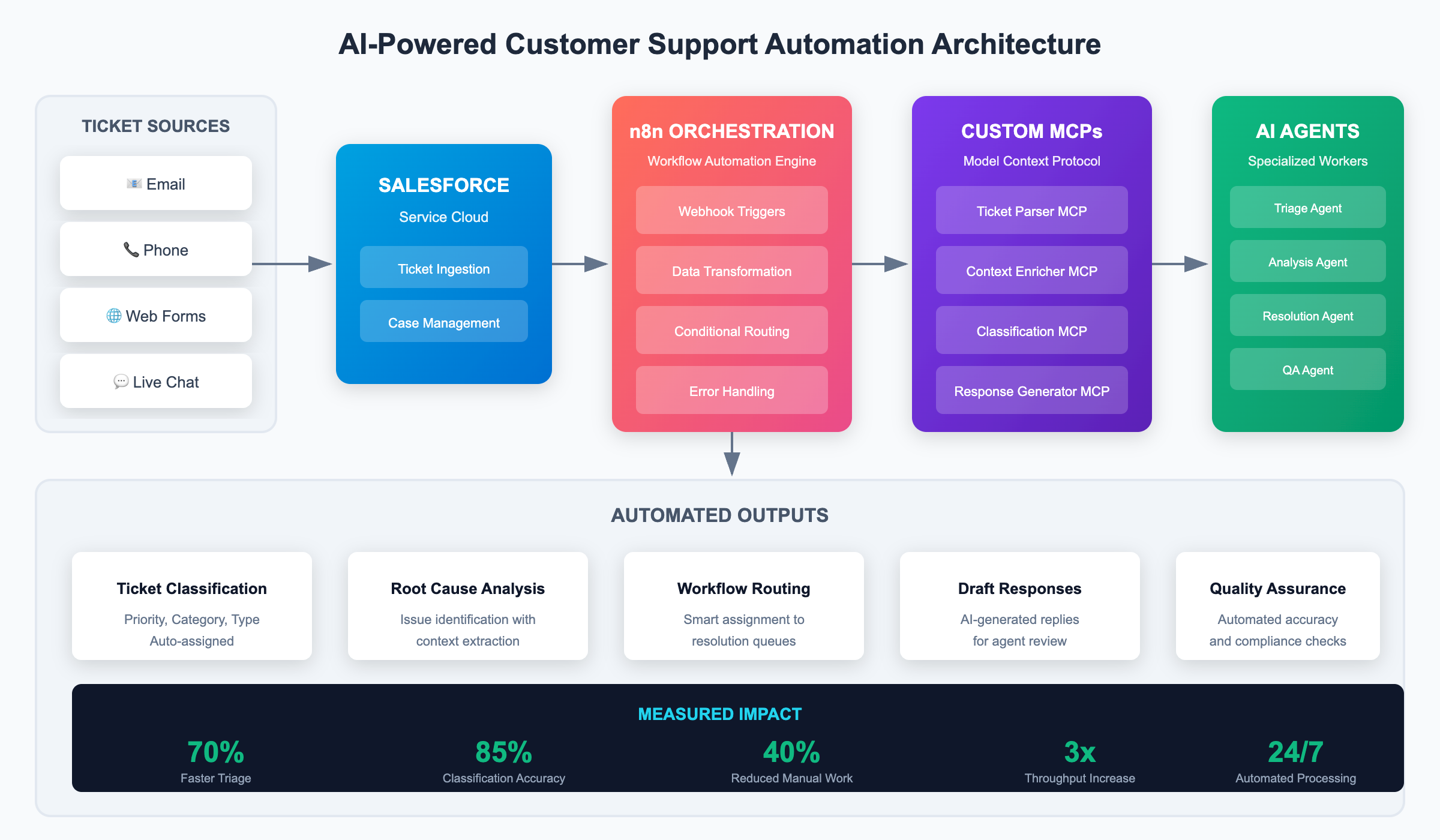
Figure 1: AI-Powered Customer Support Automation Architecture
The Results: Measurable Impact
After eight weeks of implementation and tuning, the numbers spoke for themselves:
| Metric | Improvement |
|---|---|
| Time to First Action | 70% reduction (12 min → 3.5 min) |
| Classification Accuracy | 85% (vs 72% human baseline) |
| Agent Manual Work | 40% reduction |
| Ticket Throughput | 3x increase with same team |
| Processing Availability | 24/7 automated pre-processing |
But the numbers only tell part of the story. The qualitative changes were equally significant: agents reported higher job satisfaction when freed from tedious triage work, customer feedback scores improved as response quality became more consistent, and the support team gained capacity for proactive customer success initiatives.
The Bottom Line
AI hype is everywhere. Vendors promise transformation. Consultants wave magic wands. The reality is messier and more rewarding.
Real AI value comes from understanding your specific operational reality, identifying where AI capabilities match your actual needs, and building systems that make your people more effective rather than obsolete.
Start where you hurt. Automate what is tedious. Learn by doing. Then, and only then, think about moonshots.
That is what shifting left, then shifting right, looks like in practice. That is the path from AI curiosity to AI capability.
Ready to find your automation sweet spot?
Agentiqus helps organizations cut through AI hype to find real business value.
100% money-back guarantee. Zero bullshit.
Contact us at hello@agentiqus.com